What PE firms should look for in a Salesforce vendor: A guide to deal sourcing excellence

Your deal team is drowning in the wrong work. They’re updating CRM records instead of calling bankers, reconciling spreadsheets instead of analyzing opportunities and managing data instead of managing relationships.
Most PE teams spend their time this way. It’s not a people problem; it’s a systems problem. The right Salesforce vendor for private equity doesn’t just implement software. They see where your workflow is broken and fix it.
They free up the 15-20 hours a week your team is wasting on administrative tasks. And they turn that time into a competitive advantage. But not all vendors are built the same. Choosing the wrong one will cost you; in money, in time and in deals missed.
Why most Salesforce implementations fail
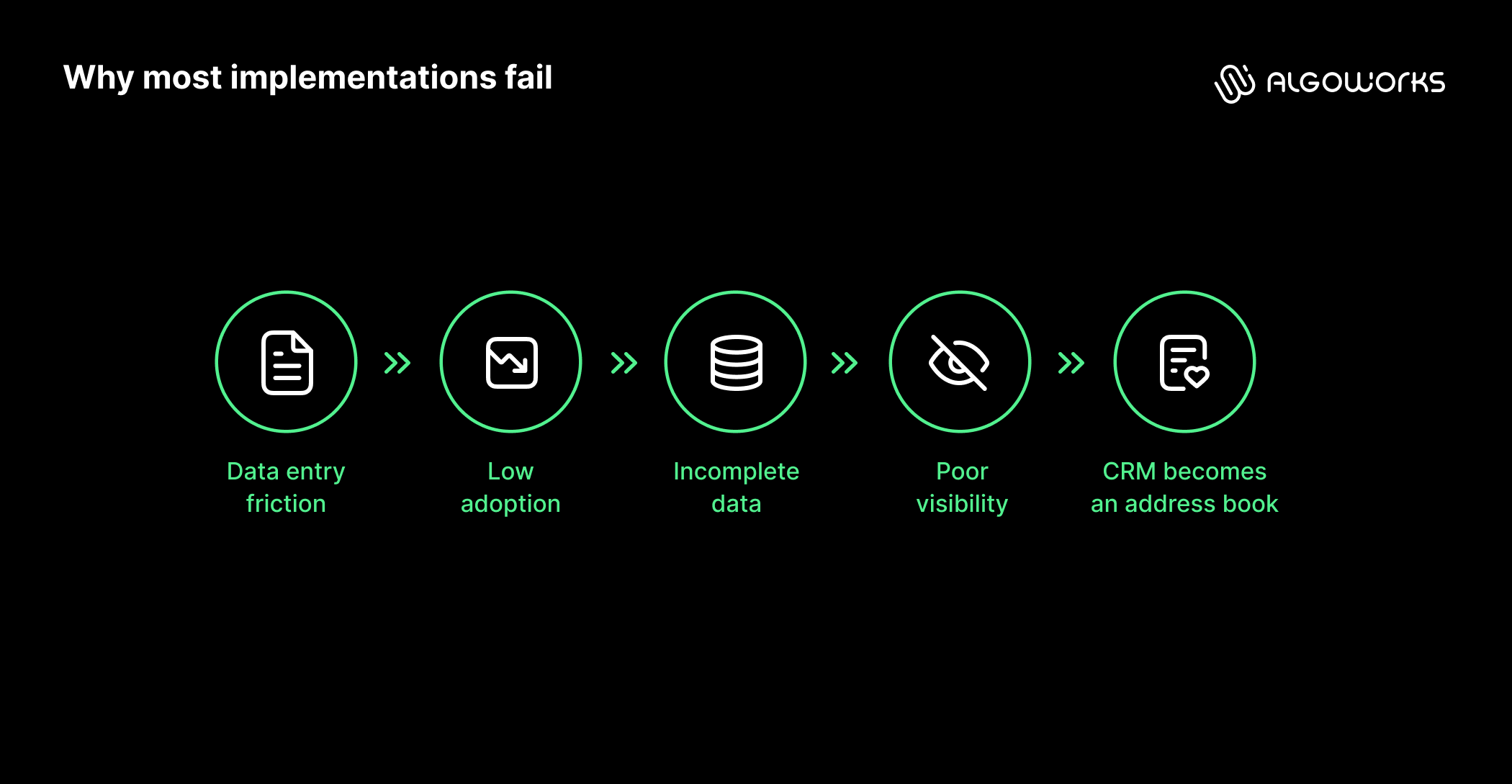
The problem isn’t Salesforce itself. It’s who implements it. The number one reason PE CRM implementations fail is data entry friction; a challenge many firms face during why transformations stall. Your team gets tired of logging data into a system built for sales teams. They stop using it.
Firms that previously ran generic CRMs consistently report low adoption on those legacy tools. Your expensive CRM becomes an address book nobody uses.
The customization trap
While Salesforce can be customized to suit many teams, the process can be time-consuming and expensive and the complex interface can also lead to adoption challenges among busy private equity investment teams.
Here’s the real issue: PE isn’t sales.
| Sales CRM | PE CRM |
| Linear funnel | Multi-year, non-linear pipeline |
| Fast closing cycle | 18-24 month relationships |
| One decision maker | Complex IC dynamics |
| Quantity focus | Quality + relationship focus |
Your deal flow is different. Your fund structures are complex. A company you pass on in 2024 might be perfect in 2026. You need a vendor who understands this; not someone applying a sales playbook to your business.
Three things that separate good vendors from great ones
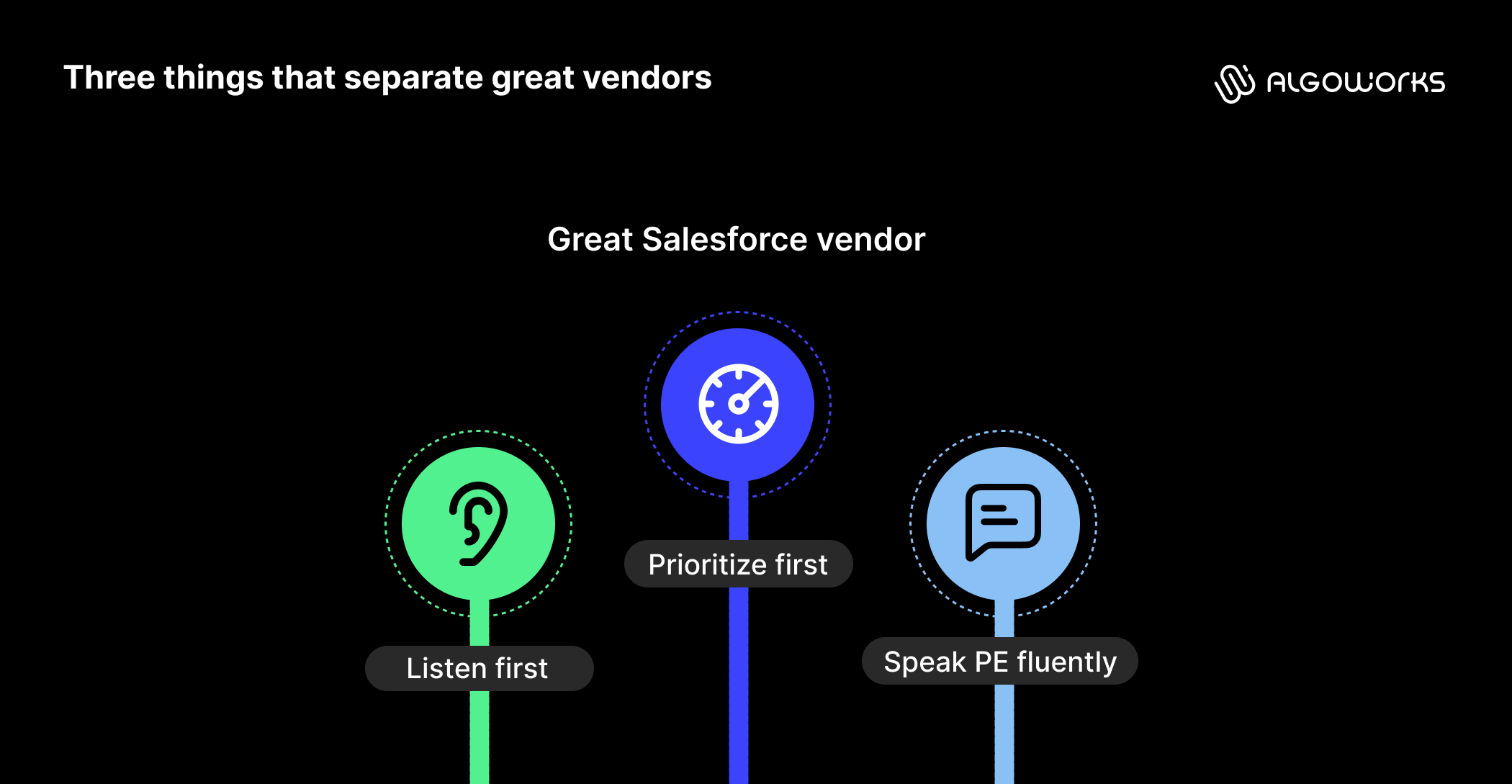
Evaluating a Salesforce vendor for private equity isn’t about certifications. It’s about whether they understand PE well enough to solve problems you haven’t even articulated yet.
1. They listen first, present second
The wrong vendor:
- Shows up with a pre-built deck of “industry-standard workflows”
- Talks about best practices and case studies
- Maps your firm onto a standardized playbook
The right vendor:
- Asks detailed questions about your actual pain points
- Wants to understand how your team works day-to-day
- Identifies problems you don’t even know you have
Why this matters: On average, a PE firm analyzes 80 opportunities for every 1 investment. That’s an enormous filtering process. Your vendor needs to understand how your team naturally works through this data. They should design systems that work with your process; not force your process to fit the system. The best vendors also bring creative ideas.
- They ask tough questions.
- They challenge your assumptions.
- They suggest approaches you hadn’t considered.
2. They prioritize speed
In PE, timing is everything. Deal comes in on Tuesday → Needs evaluation by Friday → Requires decisions by Monday. If partners can’t run their pipeline review entirely from Salesforce dashboards within the first 30 days, adoption will suffer.
What speed looks like:
- Configuration changes delivered in days, not weeks
- Report modifications without long lead times
- Critical workflow updates prioritized immediately
- Emergency requests treated as urgent
Why it matters: Every week of delays pushes your team back to Excel. And once they retreat to Excel, adoption dies.
3. They speak PE fluently
Generic Salesforce vendor for private equity are everywhere. What you need is someone who understands PE operations deeply. They should be able to discuss:
| Criterion | Why It matters |
| Listens deeply | They understand your actual workflow, not an imagined one. |
| Moves fast | Every week of delay pushes your team back to Excel. Adoption dies. |
| Speaks PE fluently | Not a sales person in PE clothing. Someone who gets the business. |
| Thinks about outcomes | They’re focused on freeing up time and competitive advantage, not implementation tasks. |
| Will push back | They’ll say no to ideas that won’t work. That’s confidence. |
What’s actually possible: Real outcomes
The data on this is striking.
Financial modeling
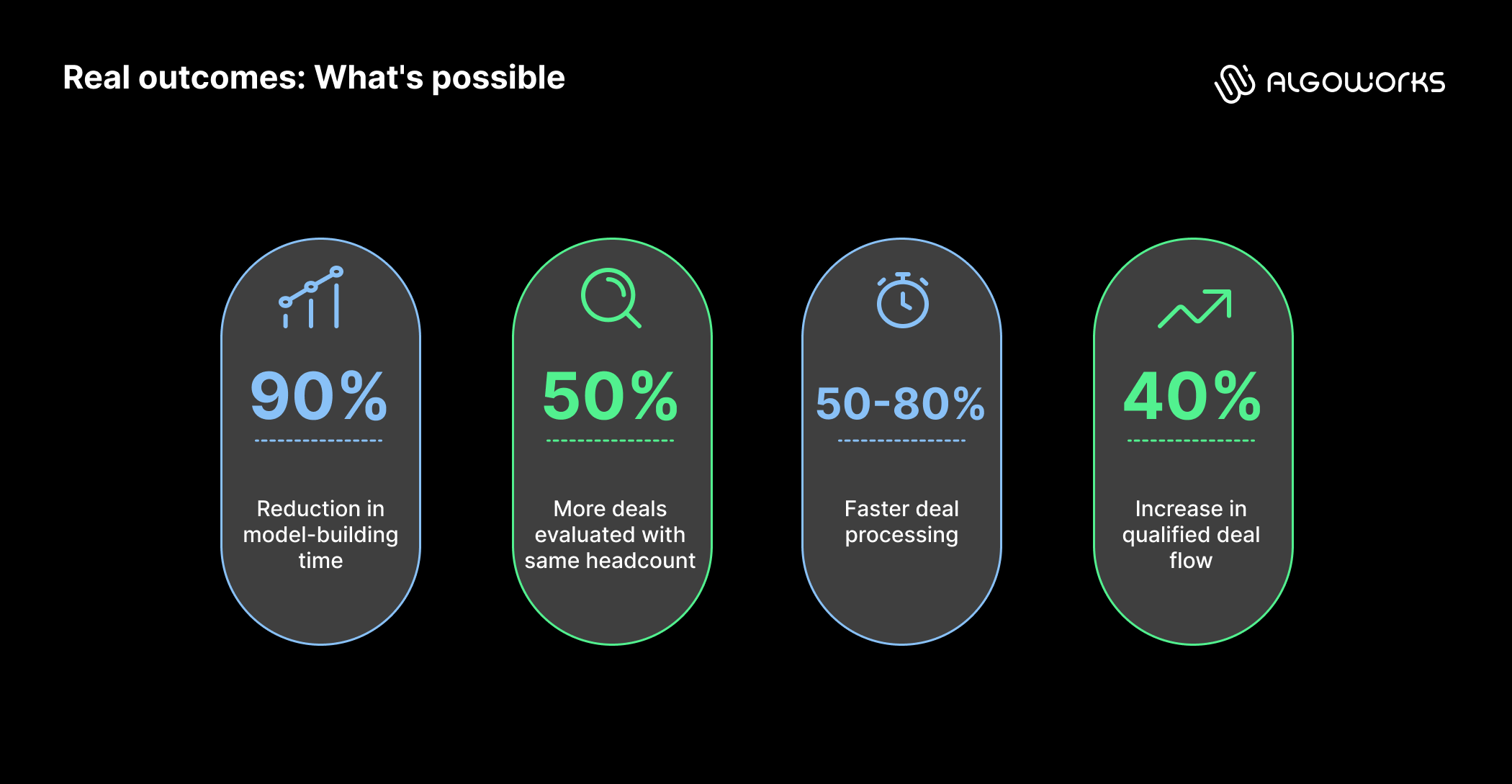
One firm cut its model-building time by 90%, freeing its analysts to examine strategic implications rather than debug spreadsheets. Overall, these efficiencies mean a deal team can evaluate 50% more deals with the exact headcount. Translation: 50% more throughput. Same team size. No additional hiring.
Deal processing speed
Firms that implement AI technologies for document processing can improve deal processing times by 50-80%.
This means:
- Fewer weeks in diligence
- Faster IC decisions
- More investment cycles per year
- Competitive advantage in hot deals
Market impact
Here’s a real example:
A $20B PE firm faced critical data fragmentation after four strategic acquisitions. The result: 40% increase in qualified deal flow, 35% reduction in due diligence time and $2.3B in previously hidden investment opportunities identified in the first year. These aren’t marginal improvements but numbers that change your competitive position.
What this frees up
When your team gets time back, they do better work. Instead of spreadsheets, they can:
- Spend more time with bankers and management teams
- Develop deeper industry expertise
- Think strategically about investment theses
- Actually use their domain knowledge
That’s the job they were hired to do.
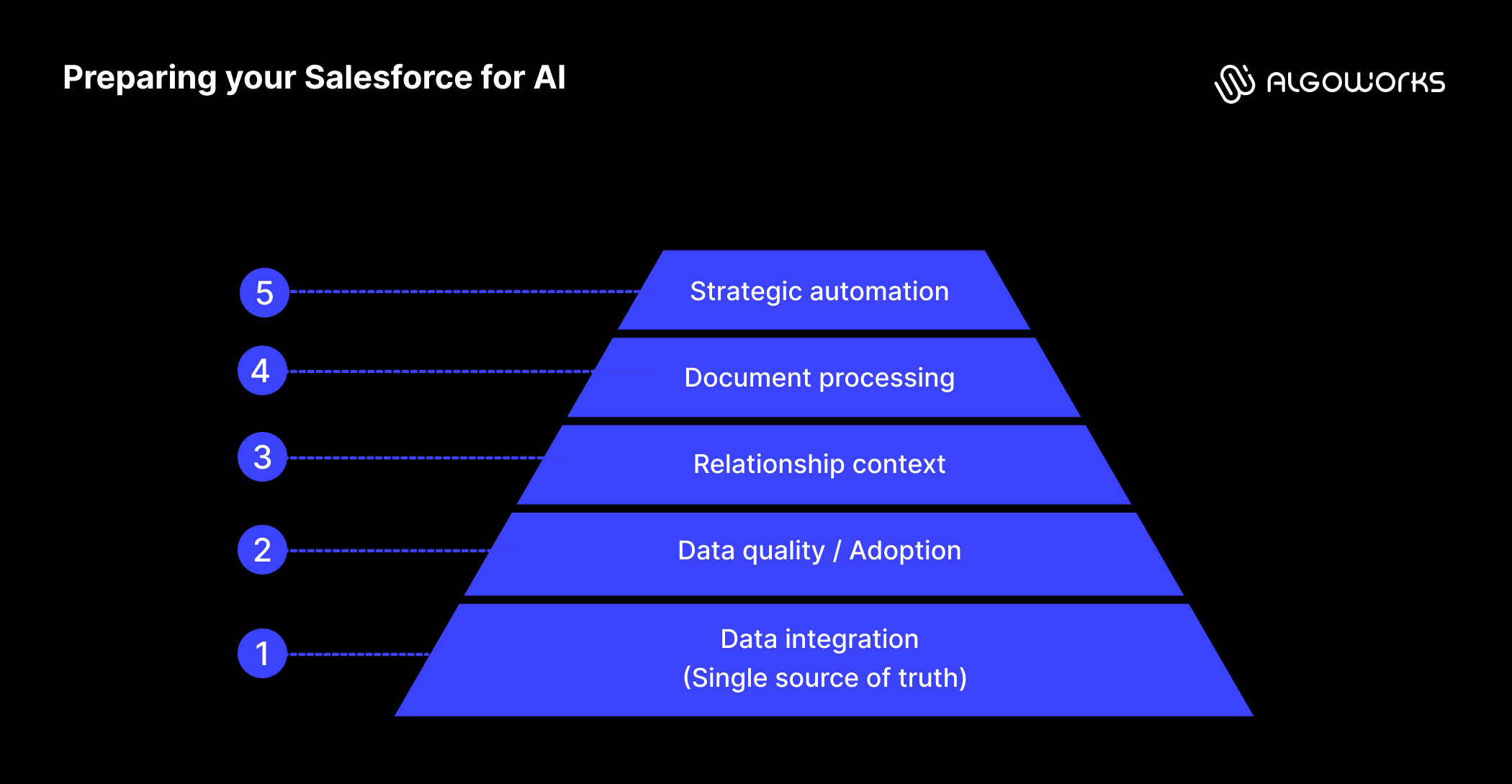
Preparing your Salesforce for AI: Five critical requirements
The best outcomes we mentioned above aren’t accidents. They come from systems intentionally built for AI, starting with data preparation for AI. 82% of private capital professionals are now using AI in their sourcing workflows. The vendors who are winning aren’t treating AI as an afterthought. They’re building systems where AI can actually work.
Here’s what that requires.
1. Eliminate data fragmentation
AI is only useful when it has complete data to analyze. After acquisitions or legacy system migrations, your deal data lives in multiple places. Your relationships are incomplete and AI can’t see the full picture.
Your vendor needs to ensure that data from disparate sources gets integrated into one place: previous funds, legacy systems, acquired platforms; all in a single Salesforce instance. The integration itself unlocks hidden opportunities your fragmented systems were hiding.
2. Achieve high data quality through adoption
Here’s the uncomfortable truth: Your AI is only as good as your data entry. The number one reason PE CRM implementations fail is data entry friction. When your team retreats to Excel because the system is too complex, the AI loses critical information.
This means your vendor must:
- Design PE-specific workflows (not sales funnels)
- Implement fast (dashboards working within 30 days)
- Create interfaces your team will actually use
- Build automation that fits your process, not force your process to fit the system
Result: Your team enters accurate data consistently. Your AI has what it needs to work.
3. Map relationship context
Generic CRMs track names and companies. AI-ready systems track context. Your system should automatically surface:
- The banker who brought Deal A also knows your ops team from Fund II
- The management team you passed on is now ready for investment
- The industry pattern emerging across five seemingly unrelated targets
This allows AI to identify deal patterns, relationships and opportunities you would discover manually; but in hours instead of months.
4. Optimize document processing
PE firms drown in paper. Your system needs to handle the filtering burden: analyzing 80 opportunities to find 1 investment. Your vendor should help you:
- Train LLMs on your CRM data and deal history
- Automate pitch deck and company memo analysis
- Surface key metrics and risk factors from unstructured documents
- Generate IC memos with AI assistance
This turns tedious document review into strategic analysis.
5. Deploy strategic automation
Not all automation is equal. Strategic automation targets high-value activities through CRM workflow automation focused on impact.
| Criterion | Why It matters |
| Listens deeply | They understand your actual workflow, not an imagined one. |
| Moves fast | Every week of delay pushes your team back to Excel. Adoption dies. |
| Speaks PE fluently | Not a sales person in PE clothing. Someone who gets the business. |
| Thinks about outcomes | They’re focused on freeing up time and competitive advantage, not implementation tasks. |
| Will push back | They’ll say no to ideas that won’t work. That’s confidence. |
The pattern is consistent: automation frees your team from tedious work and redirects them toward strategy. Your vendor should identify where AI creates leverage in your workflow. Not deploy generic automation across the board.
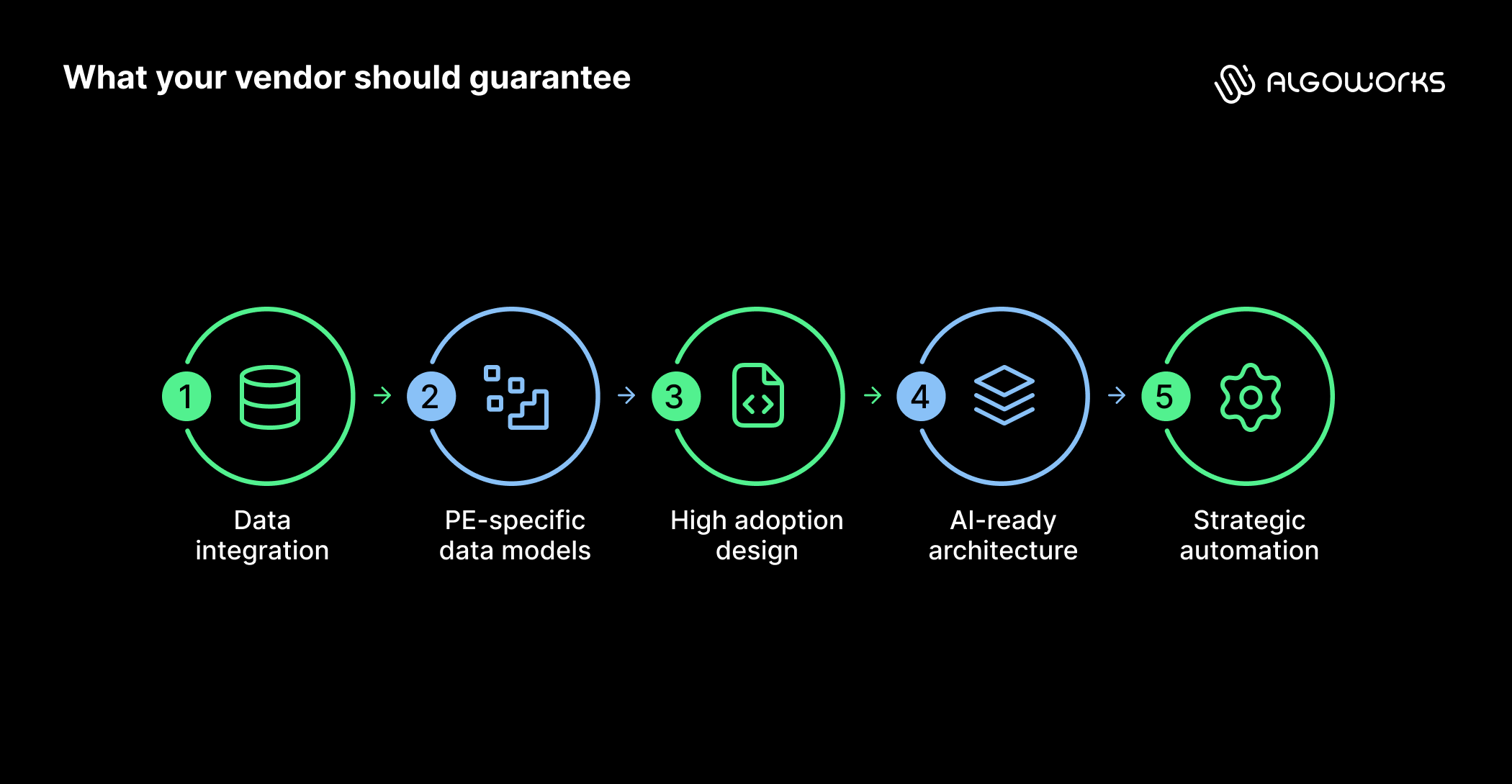
What your vendor should guarantee
When discussing AI readiness, your vendor should commit to:
- Data integration: All your deal and relationship data consolidated in one place
- PE-specific data models: Systems that reflect multi-year pipelines and complex IC dynamics
- High adoption design: Workflows that work with your team, not against them
- AI-ready architecture: Data structure that LLMs and AI tools can actually work with
- Strategic automation: Focusing on high-value activities that free up analyst time
Without these foundations, adding AI in your business outcomes strategy to your system is like putting rocket fuel in a broken engine.
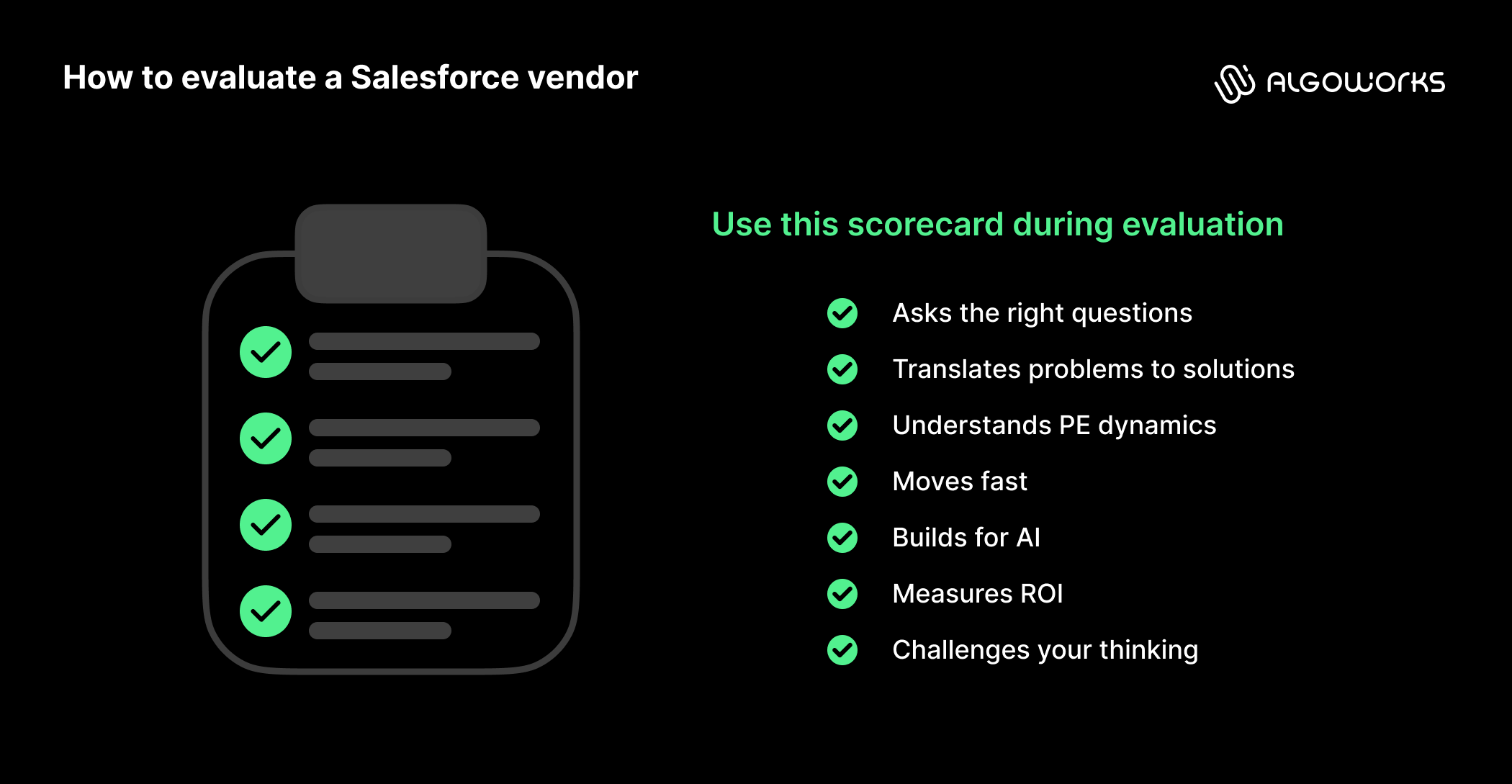
How to evaluate a Salesforce vendor for private equity
Use this checklist when talking to vendors.
Question 1: Do they ask or tell?
In your first meeting, who talks more: them or you? Red flag: They lead with methodology and case studies. Green flag: They ask about your team, your pain points, your workflow. If they’re leading with their deck, keep talking to others.
Question 2: Can they translate your problems into solutions?
Ask them directly: “Where do you think we’re wasting time?” They should be able to say something like: “Based on what you’ve told me, I see 15-20 hours a week in deal data entry. Here’s how we’d automate that. Here’s what that frees up for your team strategically.” They should name specific problems and specific solutions.
Question 3: Do they understand PE dynamics?
Ask about:
- How they handle PE specific CRM solution
- How they track relationships across funds
- How they set up information barriers for different LPs
- How they handle deal attribution (which banker brought this opportunity?)
Their answers will tell you if they’re thinking in PE terms or applying sales playbooks.
Question 4: How fast do they move?
Ask for 2-3 references. Then ask each one: “When you needed a change; a new report, a workflow adjustment, a configuration change; how long did it take?”
Acceptable answer: Days to a week Unacceptable answer: “A few weeks” Speed during implementation compounds. Delay by a week and your team goes back to Excel. Once they’re in Excel, adoption is dead.
Question 5: Do they say no?
The best vendors will push back on some ideas. They’ll say, “That automation won’t work because it doesn’t match your workflow.” Or, “That feature looks good on a spreadsheet but your team won’t use it.” Vendors who say yes to everything aren’t thinking about adoption; they’re thinking about easy implementations.
Question 6: Are they building for AI?
Ask directly: “How are you architecting this system for LLMs and AI?”
They should discuss:
- How they’ll consolidate your data fragmentation
- How they’ll structure relationships for AI to understand
- Which workflows they’ll automate and why
- How they’ll measure AI readiness
Vendors who haven’t thought about this are building 2024 solutions for 2026 problems.
Question 7: Can they show you ROI?
200–400% ROI within 18 months through faster deal execution, improved LP retention and portfolio-wide operational performance is realistic. A good vendor can articulate specific value drivers for your firm. They’re thinking about outcomes; not just implementation tasks.
The competitive advantage
You’re already behind if you haven’t moved. Once you’ve selected your vendor, understanding Salesforce implementation best practices ensures smooth execution and faster adoption. If you’re running deal sourcing the same way you were five years ago, your competitors who modernized are moving faster.
They’re:
- Seeing more deals
- Making faster decisions
- Evaluating more opportunities with same headcount
- Finding deal patterns you’re missing
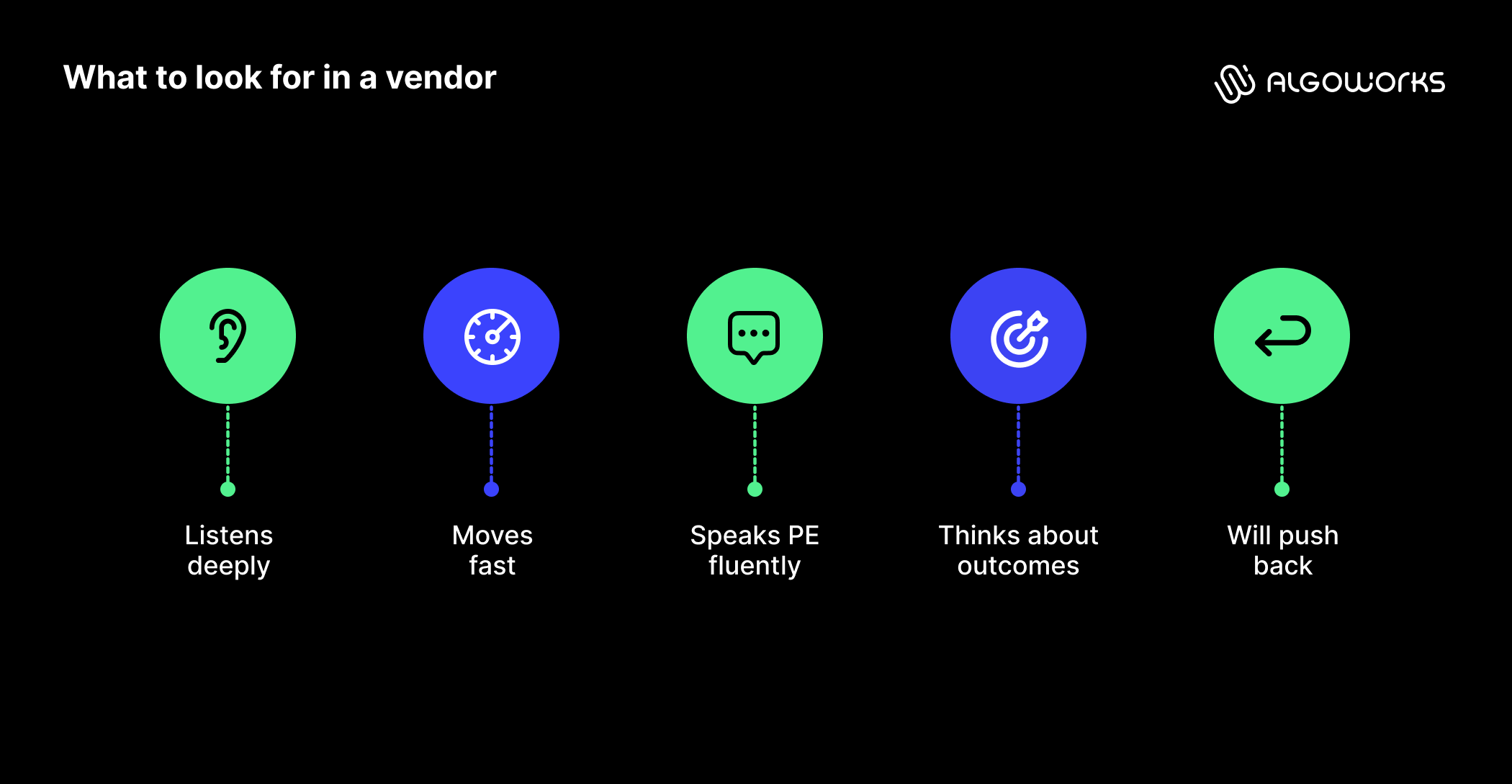
What to look for in a vendor
It’s not complicated. You need someone who:
| Criterion | Why It matters |
| Listens deeply | They understand your actual workflow, not an imagined one. |
| Moves fast | Every week of delay pushes your team back to Excel. Adoption dies. |
| Speaks PE fluently | Not a sales person in PE clothing. Someone who gets the business. |
| Thinks about outcomes | They’re focused on freeing up time and competitive advantage, not implementation tasks. |
| Will push back | They’ll say no to ideas that won’t work. That’s confidence. |
The real difference
A great Salesforce vendor for private equity doesn’t just implement software. They become an extension of your team. That’s why partnering with a Salesforce consulting agency matters. They become an extension of your team.
They:
- Free up 15-20 hours per week of wasted time
- Help you process 50% more deals with the same headcount
- Surface relationships and patterns you would have missed
- Enable your team to actually do their job
You’re evaluating 700+ deals annually to close 3-4. The vendor you choose will determine whether you find the best ones or miss them. Choose accordingly.